|
|
|---|
The 19th century, especially around the 1840s, was a period of heightened cultural reverence for Shakespeare,
seen not only in adaptations like Verdi's Macbeth but also in broader efforts to elevate him as a national icon of British literary and cultural identity.
Charles Dickens, a major literary figure of the time, deeply admired Shakespeare, and his works often reflect Shakespearean themes and references.
Dickens even played a role in public efforts to preserve Shakespeare's legacy.
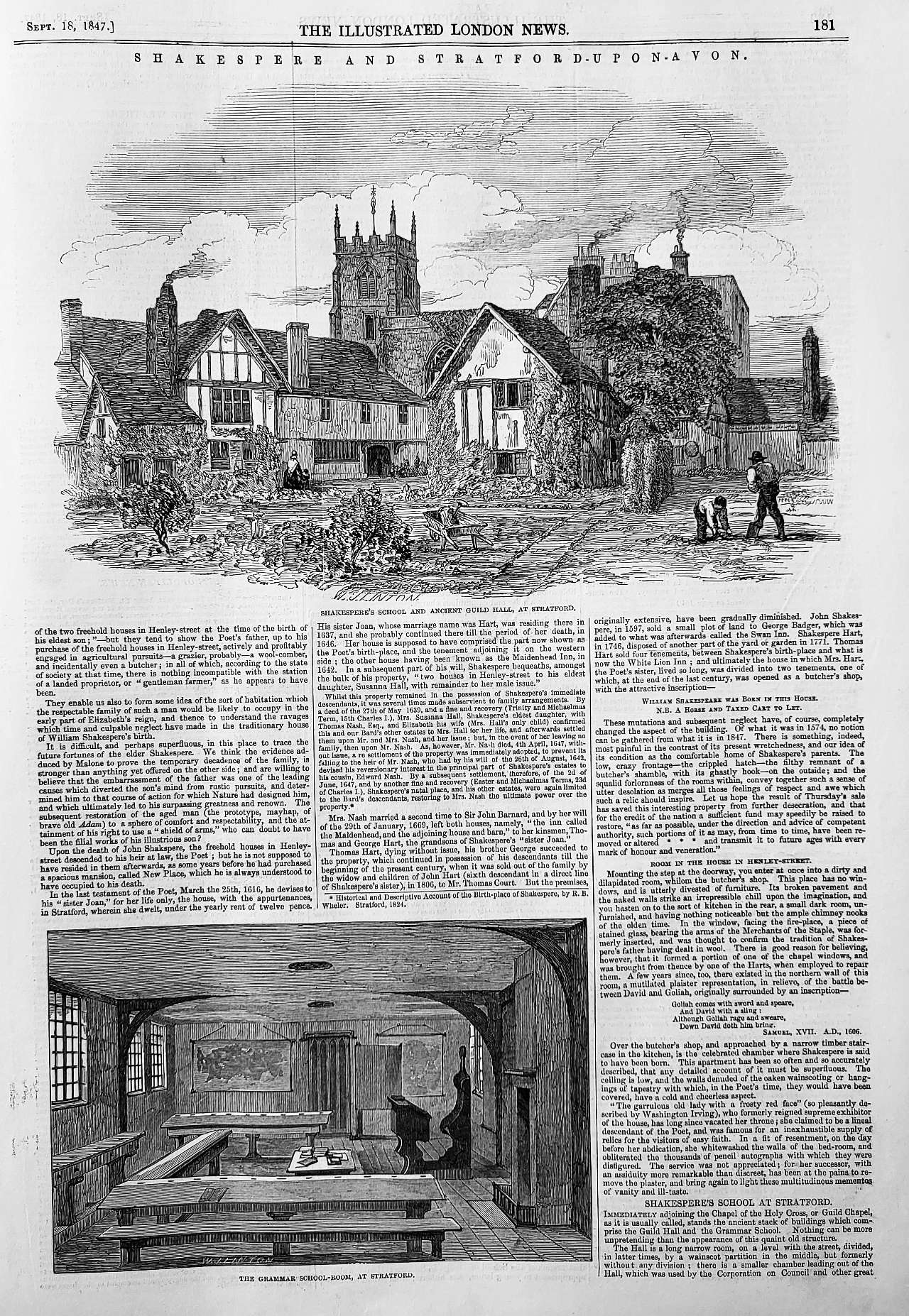
In 1847, Dickens was involved in the campaign to save Shakespeare's birthplace in Stratford-upon-Avon, which had fallen into disrepair.
This movement helped solidify Shakespeare as a national treasure, celebrated for both his literary genius and his moral and cultural contributions.
Moreover, during the Victorian era, Shakespeare's plays were often reinterpreted for contemporary audiences.
Productions would sometimes alter the text to fit Victorian sensibilities, emphasizing morality, decorum, and family values.
This period marked the beginning of Shakespeare’s integration into formal education,
where his works became part of the national curriculum, further embedding him into British cultural identity.
So, 1847 is a part of the broader 19th-century movement where Shakespeare's legacy
was adapted and revered as an essential part of British culture.
Around 1847 there were rumors that P.T. Barnum, the famous American showman, was interested in buying Shakespeare's birthplace in Stratford-upon-Avon and shipping it to the United States.
This story gained traction, at a time when Shakespeare's birthplace was in a state of disrepair and at risk of being sold.

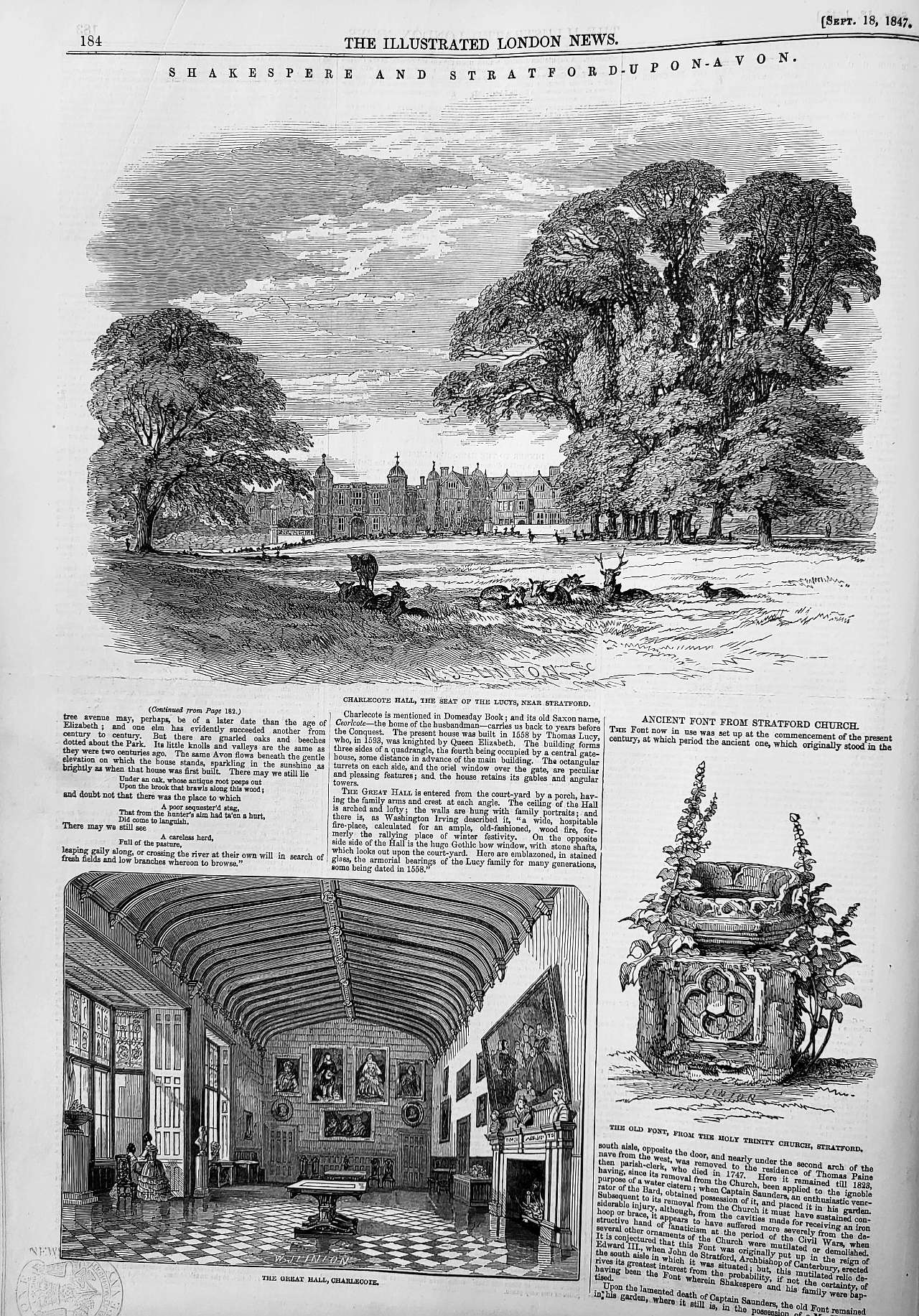
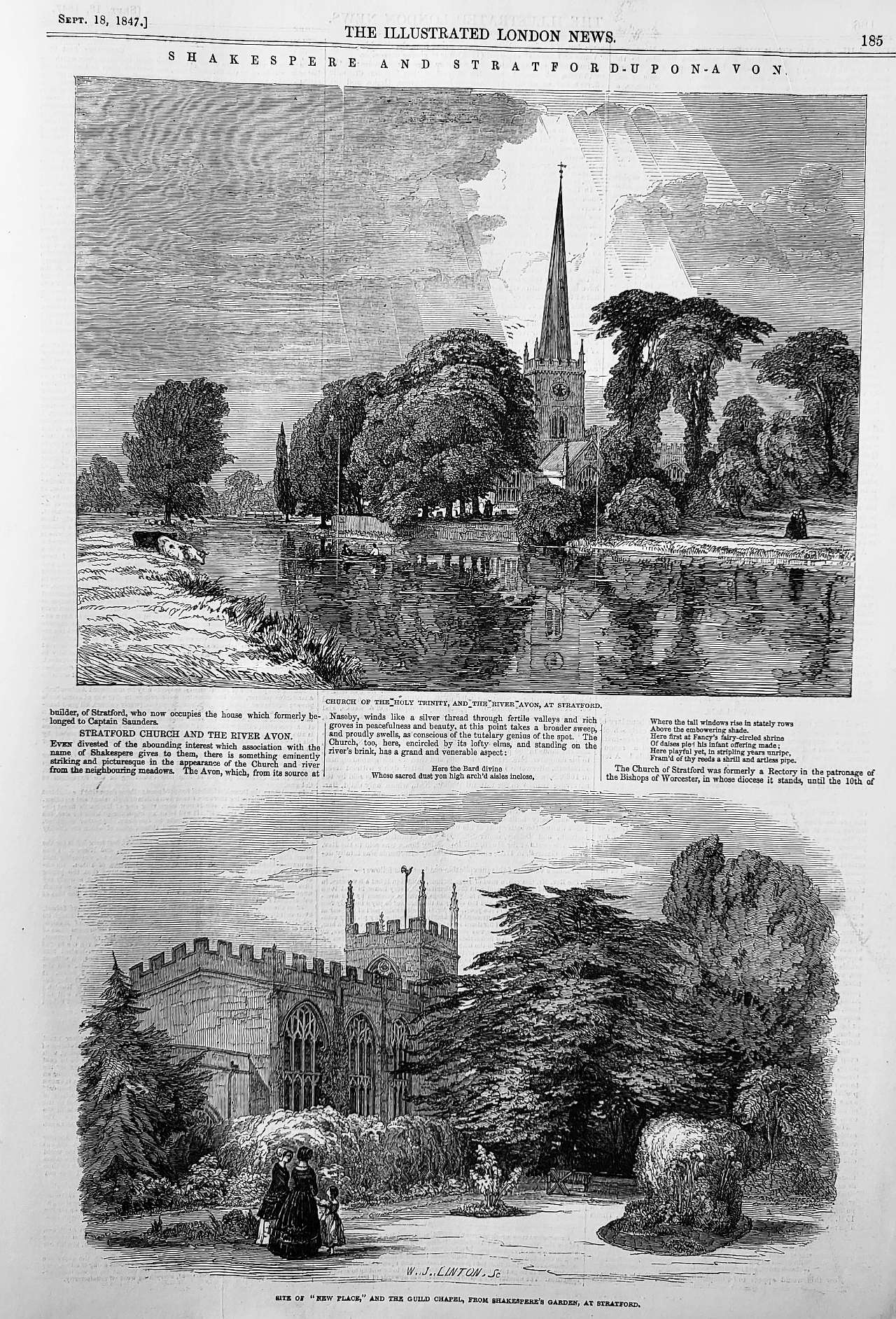
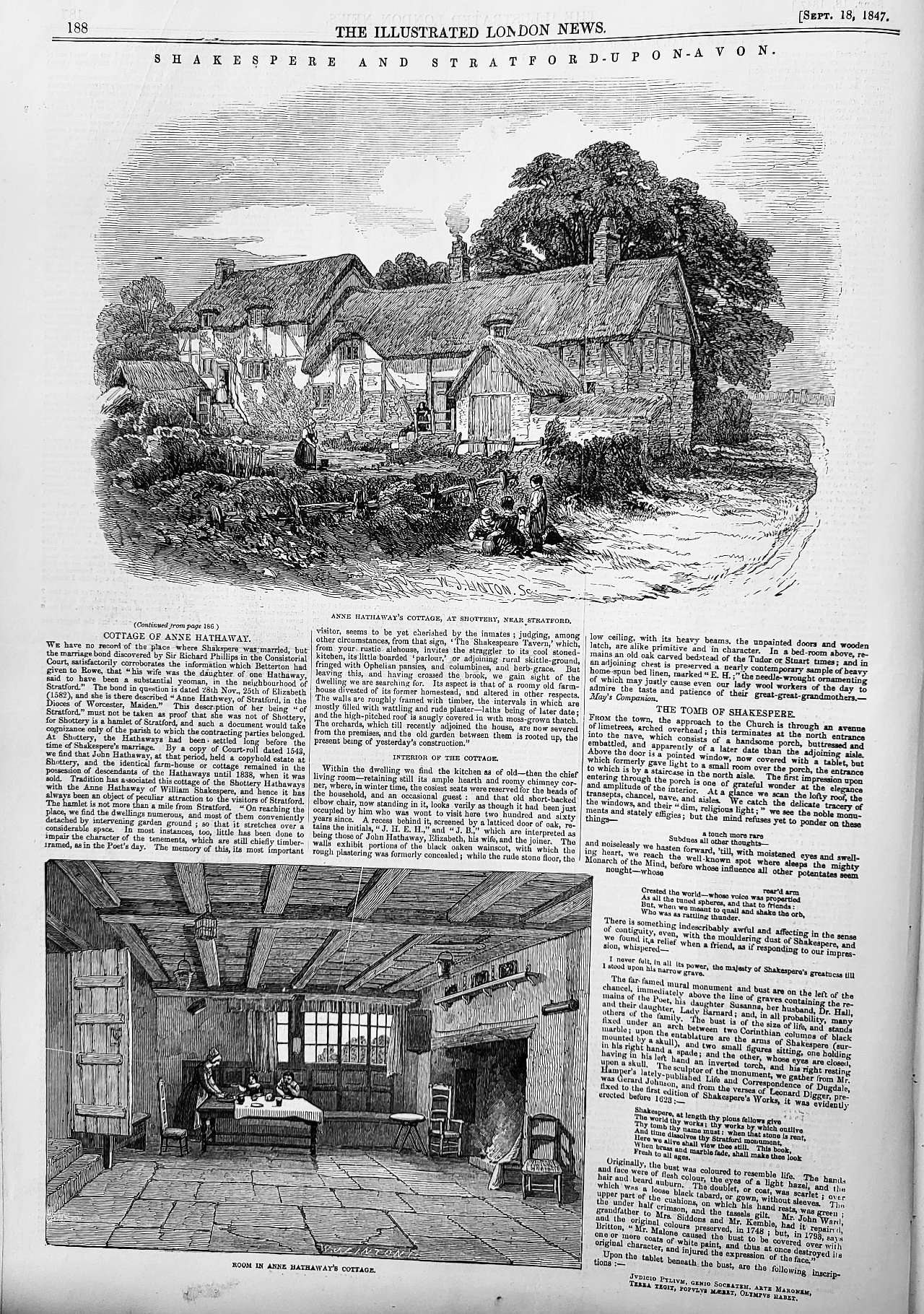
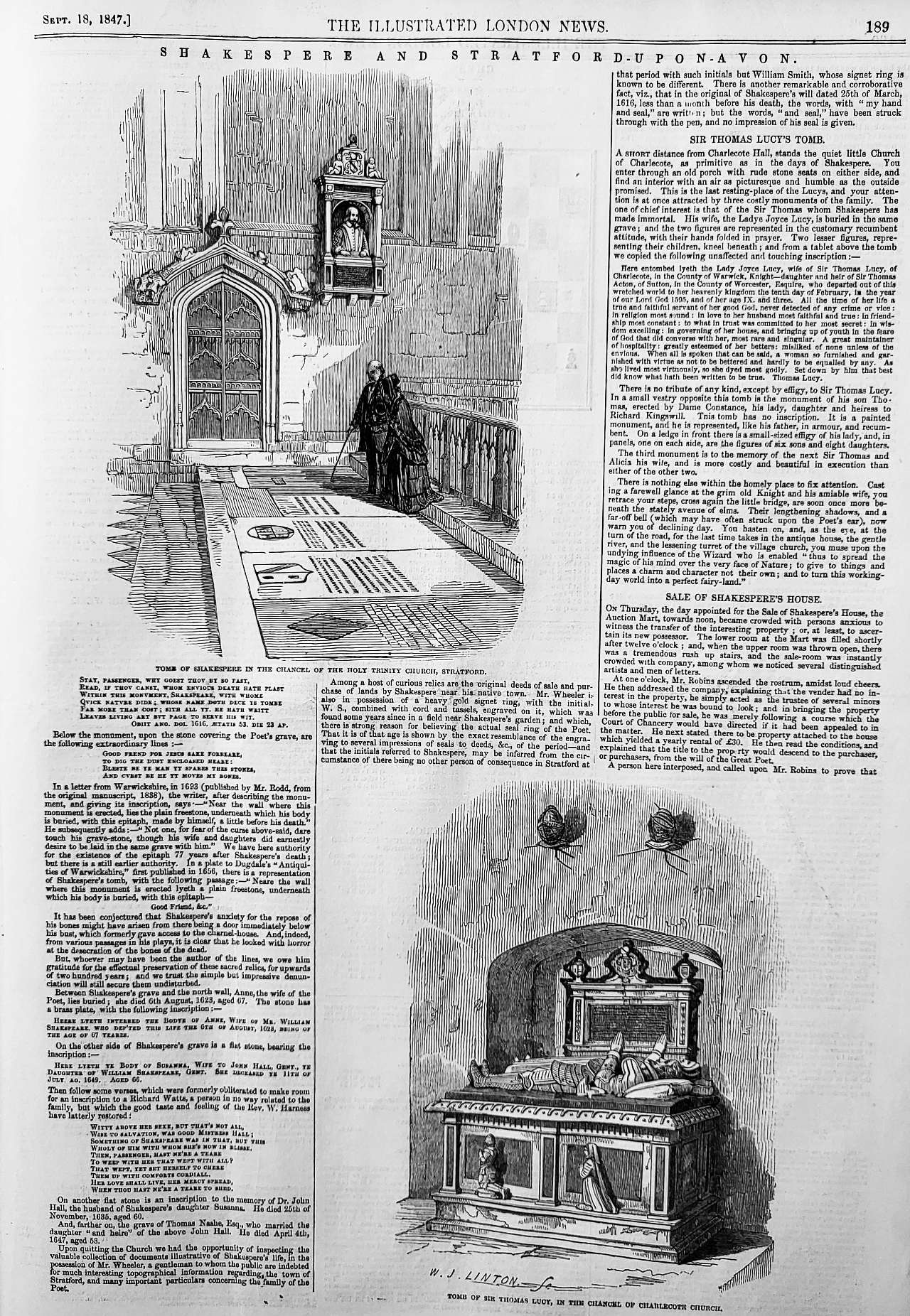
Stratford -upon-Avon

Shakespeare and Stratford- upon - Avon
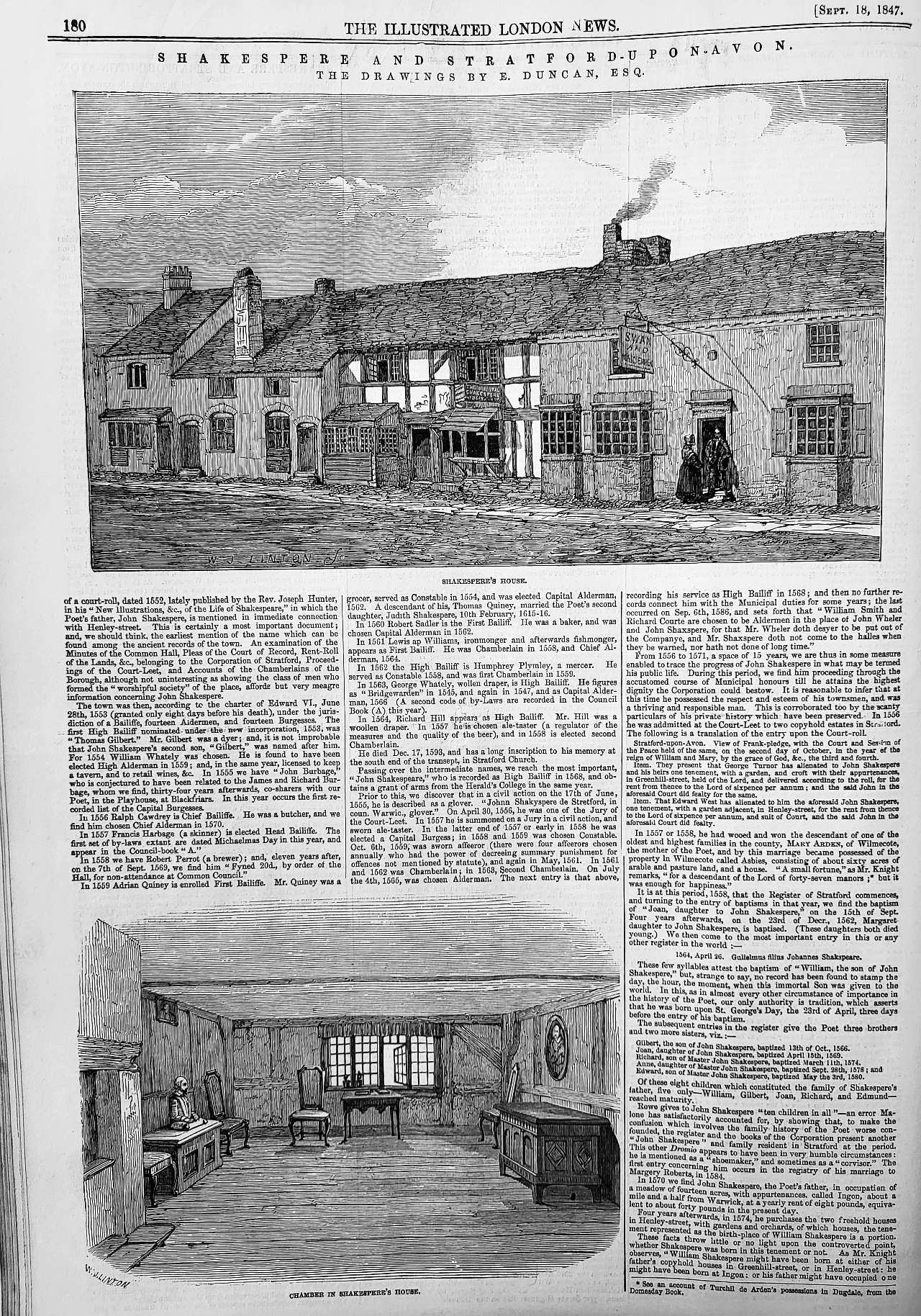
Shakespere's house and a chamber in his house