Palestine 1937 part 6
The Arab Revolt — Illustrated London News Collection
In 1937 Palestine stood at a turning point. The Arab Revolt continued at a lower level through the early months, while the British Peel Commission examined its causes. In July the Commission recommended partition — a proposal that transformed the political landscape and triggered renewed violence. After the assassination of a senior British official in September, the Arab Higher Committee was banned and leading Palestinian figures were removed or exiled. By the end of the year the revolt had intensified again, setting the stage for the harsher campaigns of 1938–39.
Palestine 1937 — Key Events (Short Timeline)
January–June 1937
The early months of 1937 saw the continuation of the Arab Revolt. Violence was lower than in 1936, but unrest persisted:
-
Sporadic attacks on British patrols and police posts.
-
Road and railway sabotages.
-
Small guerrilla bands still active in rural districts.
-
British forces carried out searches, arrests and curfews across the country.
At the same time, the Peel Commission was finalising its investigation into the causes of the unrest.
July 1937 — Peel Commission Report
The Commission recommended, for the first time, the partition of Palestine into separate Arab and Jewish states, with a continuing British-controlled corridor around Jerusalem. The proposal caused immediate uproar among Arab leaders and cautious debate within the Zionist movement.
August 1937 — Renewed Violence
Rebel activity increased sharply after the Peel proposals became public. British personnel were targeted more frequently, and rural districts saw a return of sustained guerrilla operations.
September 1937 — Political Crisis
Following the assassination of the Acting District Commissioner of Galilee, Lewis Andrews, Britain outlawed the Arab Higher Committee and dismissed Haj Amin al-Husseini from the presidency of the Supreme Muslim Council. Many Arab leaders were arrested or exiled.
Late 1937 — Escalation
By the end of the year the revolt had entered a new, more intense phase, with coordinated rebel bands, increased British military deployment, and widespread security operations across Palestine.
Palestine 1939 part 6
The Arab Revolt — Illustrated London News Collection
These pages collects ILN coverage and related material documenting the 1936–1939 Arab Revolt in Palestine — a critical prelude to the events of 1948.
Between 1936 and 1939 Palestine was shaken by a major uprising against British rule and growing Jewish immigration. Known as the Arab Revolt, it began with a general strike in April 1936 and escalated into widespread unrest — strikes, civil disobedience and armed guerrilla actions. The British responded with military force and political commissions, notably the Peel Commission (1937), which for the first time formally proposed partition as a solution.
The uprising reflected long-standing grievances: land transfers and tenancy losses associated with Zionist land purchase; economic displacement and unemployment among Arab workers; and political frustration at the absence of meaningful Arab self-government under the British Mandate, especially after the 1917 Balfour Declaration.
Key figures (brief)
- Haj Amin al-Husseini — Grand Mufti of Jerusalem; prominent political leader and head of the Arab Higher Committee during 1936.
- Izz ad-Din al-Qassam — Militant preacher (killed 1935); his killing helped galvanise anti-British sentiment that fed into 1936 unrest.
- Abd al-Rahim al-Hajj Muhammad — Principal field commander in the central highlands, led prolonged guerrilla action in 1938–39.
- Fawzi al-Qawuqji — Arab volunteer commander who led irregular forces active in and around Palestine.
- Sir Arthur Wauchope — British High Commissioner (1931–1938) who presided over Mandate security responses.
- Lord Peel — Chaired the 1937 Royal Commission (Peel Commission) that proposed partition.
(All names are well-documented in British mandate records, ILN reportage and modern histories.)
Short historical note
The revolt ran from April 1936 to 1939. It combined urban strike action and rural guerrilla warfare. Britain deployed increasing security forces and introduced emergency regulations; thousands were arrested, and many Palestinian political organisations were weakened or banned. The Peel Commission (1937) and subsequent White Paper (1939) shaped the political debate but did not resolve the conflict; the decline of Palestinian organisation during these years was a key factor leading into the later 1947–48 crisis.
January 1939
The Arab–Jewish Conference of Early 1939
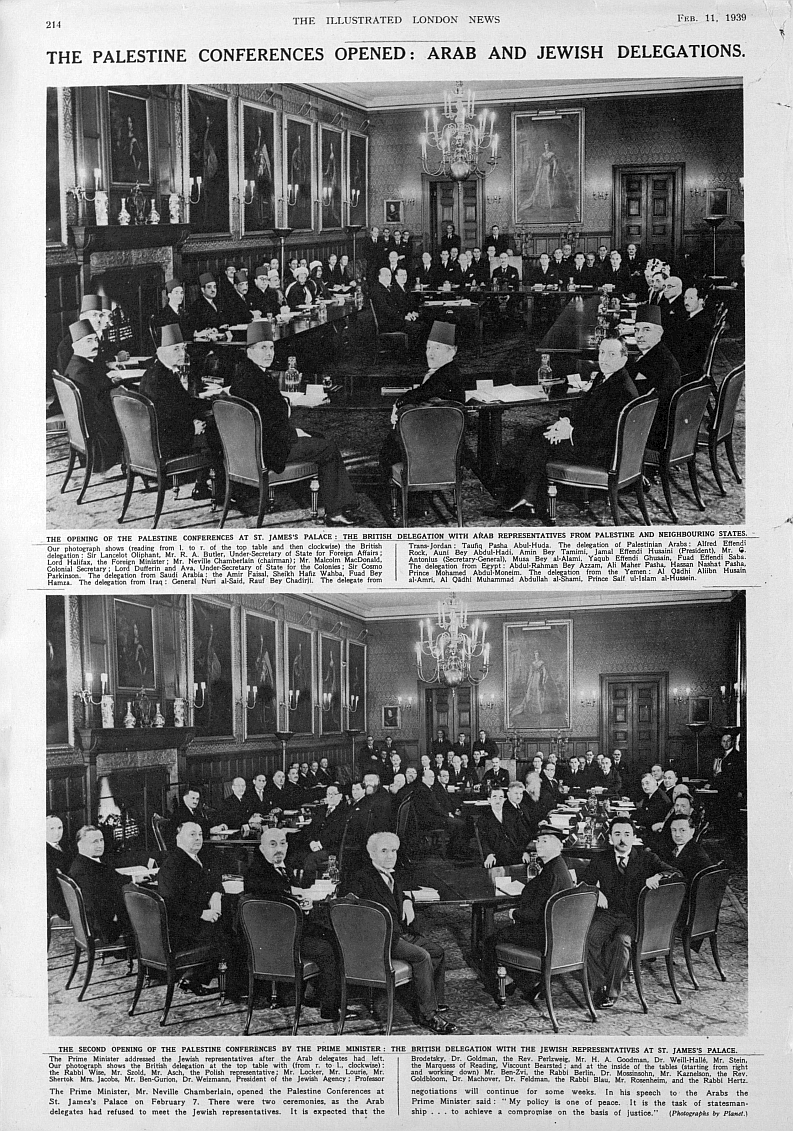
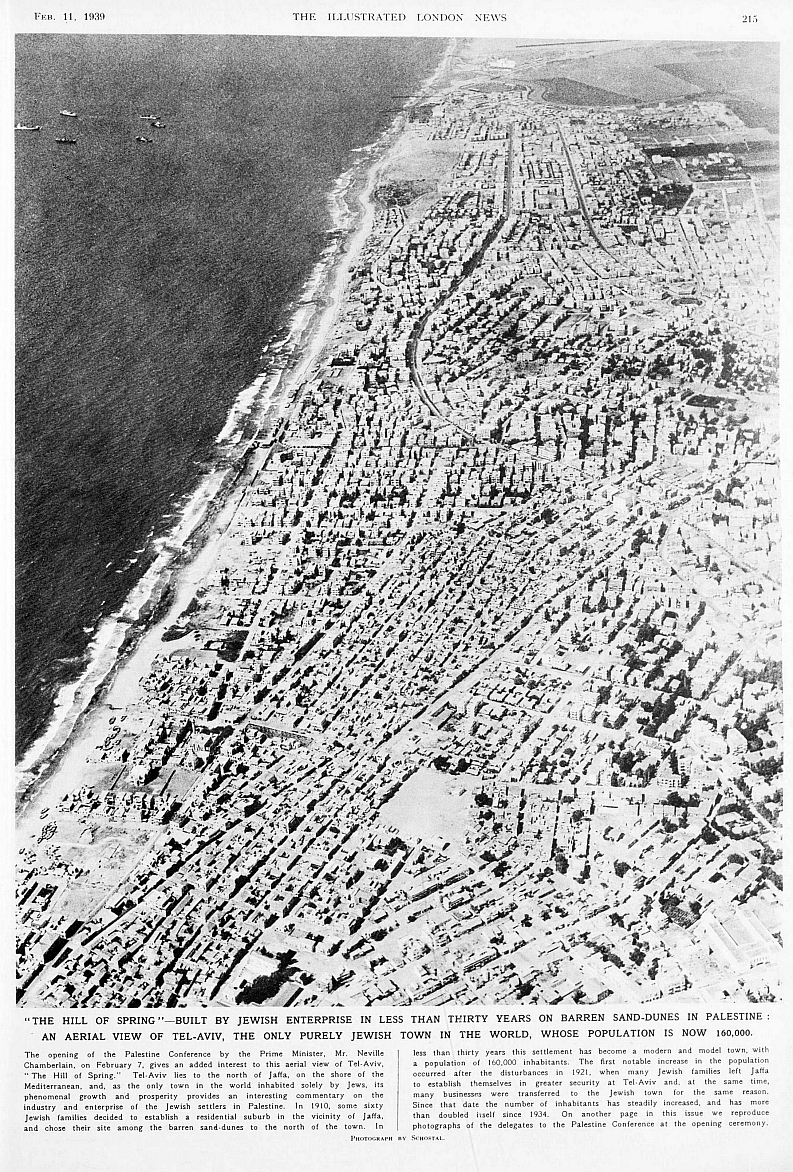
In February–March 1939 the British Government convened a conference in London, held at St James’s Palace, bringing together representatives of the Arab states and Palestinian Arabs, Jewish representatives, and British officials. Arabs and Jews did not meet directly but were consulted separately by the British delegation.
The conference failed to reach agreement.
Arab representatives rejected any settlement that allowed continued Jewish
immigration or envisaged partition, while Jewish representatives opposed
restrictions on immigration and objected to proposals that would limit
the development of a Jewish national home.
No joint declaration or settlement emerged from the conference.
The 1939 White Paper
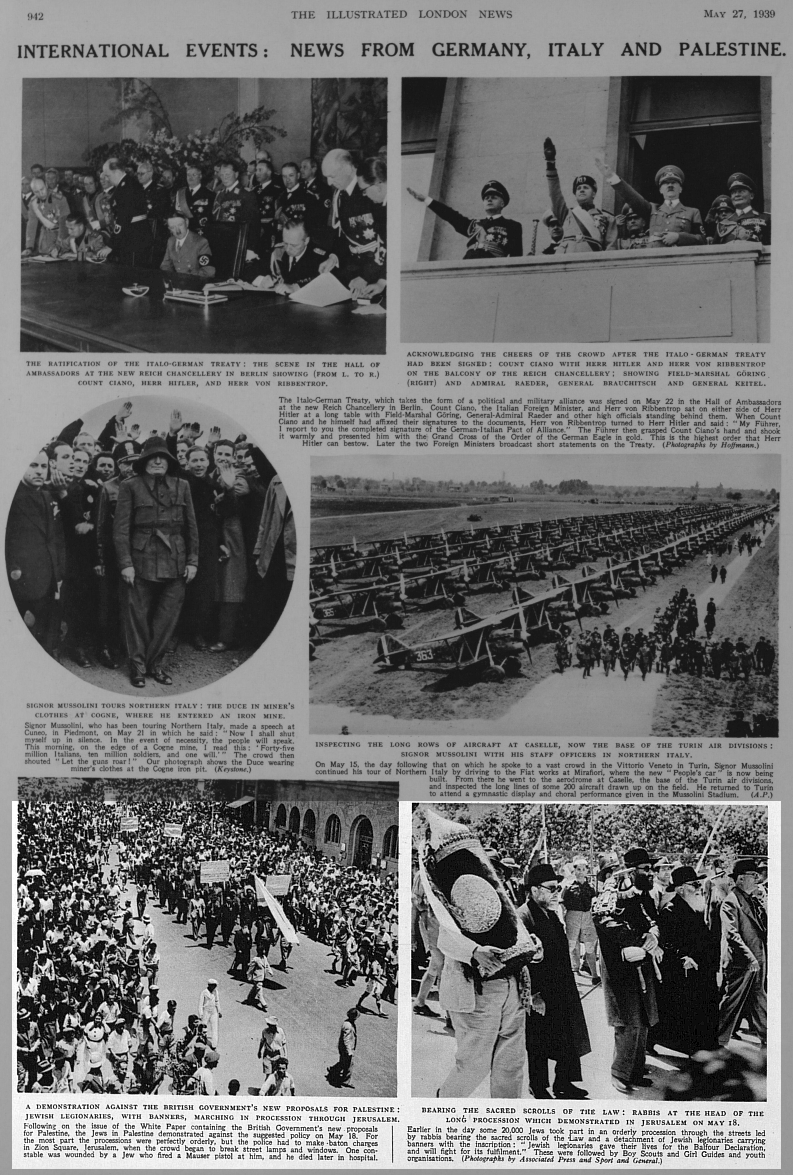
Following the failure of the London conference, the British Government issued the White Paper of May 1939, which marked a decisive shift in policy.
Its principal provisions were:
-
The creation, within ten years, of an independent Palestine governed jointly by Arabs and Jews
-
A strict limit on Jewish immigration (75,000 over five years), after which further immigration would require Arab consent
-
Severe restrictions on Jewish land purchases in much of Palestine
The White Paper effectively abandoned partition as a policy.
It was rejected by both sides:
-
Arab leaders objected to any continued Jewish immigration
-
Jewish leaders condemned the restrictions, particularly in the context of growing persecution of Jews in Europe
Other Developments in 1939 Affecting Arab–Jewish Relations
Several additional developments in 1939 significantly affected the situation in Palestine:
End of the Arab Revolt
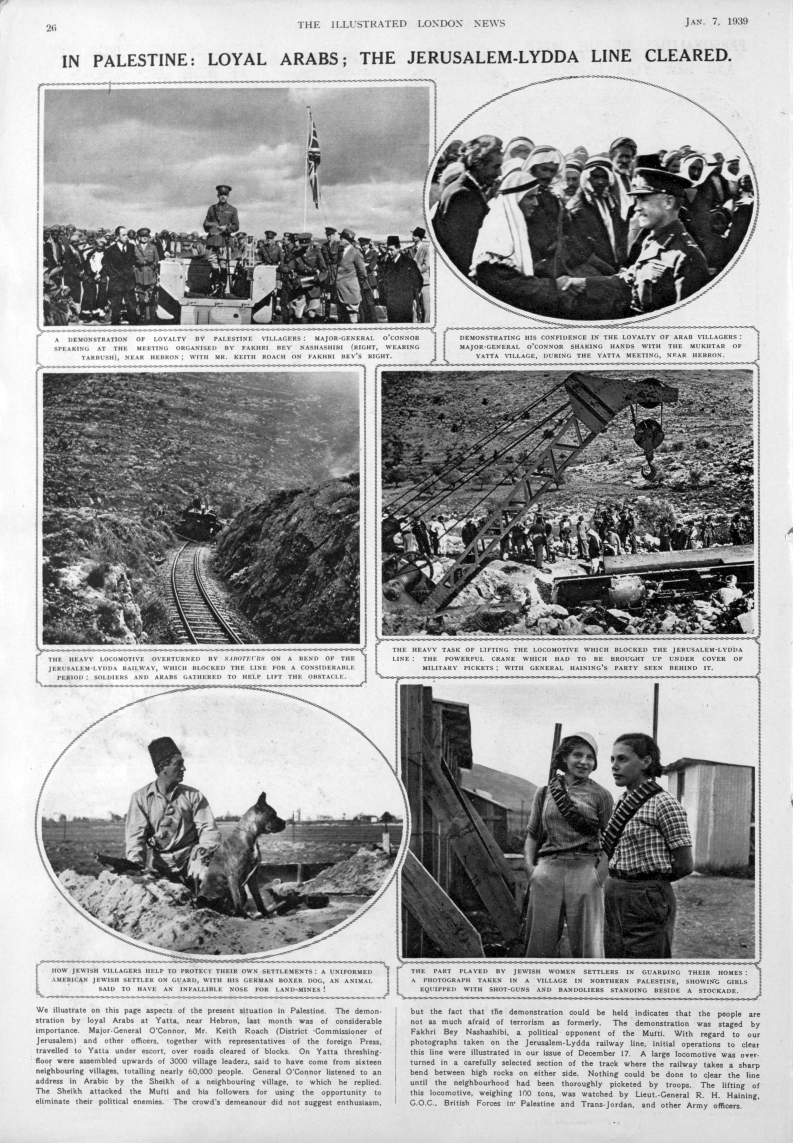
By early 1939 the Arab Revolt (1936–39) had been largely suppressed by British military action. Much of the Palestinian Arab political leadership was imprisoned, exiled, or otherwise neutralised, weakening organised Arab resistance in the short term.
Jewish Underground Response
Jewish defence organisations, particularly the Haganah, continued to expand, while more militant groups rejected British authority outright. Opposition to the White Paper led to increased illegal immigration efforts and preparations for future conflict.
Approach of the Second World War
The outbreak of war in Europe in September 1939 altered British priorities. Palestine became strategically important, and the Government sought to prevent further large-scale unrest during wartime, reinforcing the White Paper policy despite continuing opposition.
January 7th 1939 -
 4
4
- Peel Commission Report (Cmd. 5479), 1937.
- Mattar, Philip. The Arab Revolt 1936–1939 (selected modern histories).
- Contemporary ILN issues (scanned pages on this site).